 Frequency Generator for iPhone & Android
Frequency Sound Generator
Play any tone from 1 Hz to 22,000 Hz with decimal precision. Test speakers and headphones, check your hearing, tune an instrument, or just hear what a frequency sounds like — in the app, or right here in your browser.
Free to download. Optional PRO upgrade.
- App Store rating
- 4.7★
- Google Play rating
- 4.6★
- Frequency range
- 1–22,000 Hz
- Languages
- 38
Free online sound tools
Each one runs in your browser. Nothing to install, nothing uploaded, no sign-up.
- Tone generatorAny frequency, four waveforms, left or right.
- High frequency soundHigh-pitched tones up to 22 kHz.
- Frequency sweepGlide between any two frequencies.
- Binaural beatsA different tone in each ear.
- Bass & subwoofer testLow tones from 10 Hz to 200 Hz.
- Noise generatorWhite, pink and brown noise.
- Hearing testThe highest tone you can still hear.
- Note frequenciesEvery note in hertz, A4 = 440 or 432.
- DTMF tonesPhone keypad tones, key by key.
- Metronome20 to 300 BPM with tap tempo.
- Dog whistleA high whistle tone with patterns.
Everything in the app
One app for tones, tests and tuning. These are the tools people open most.
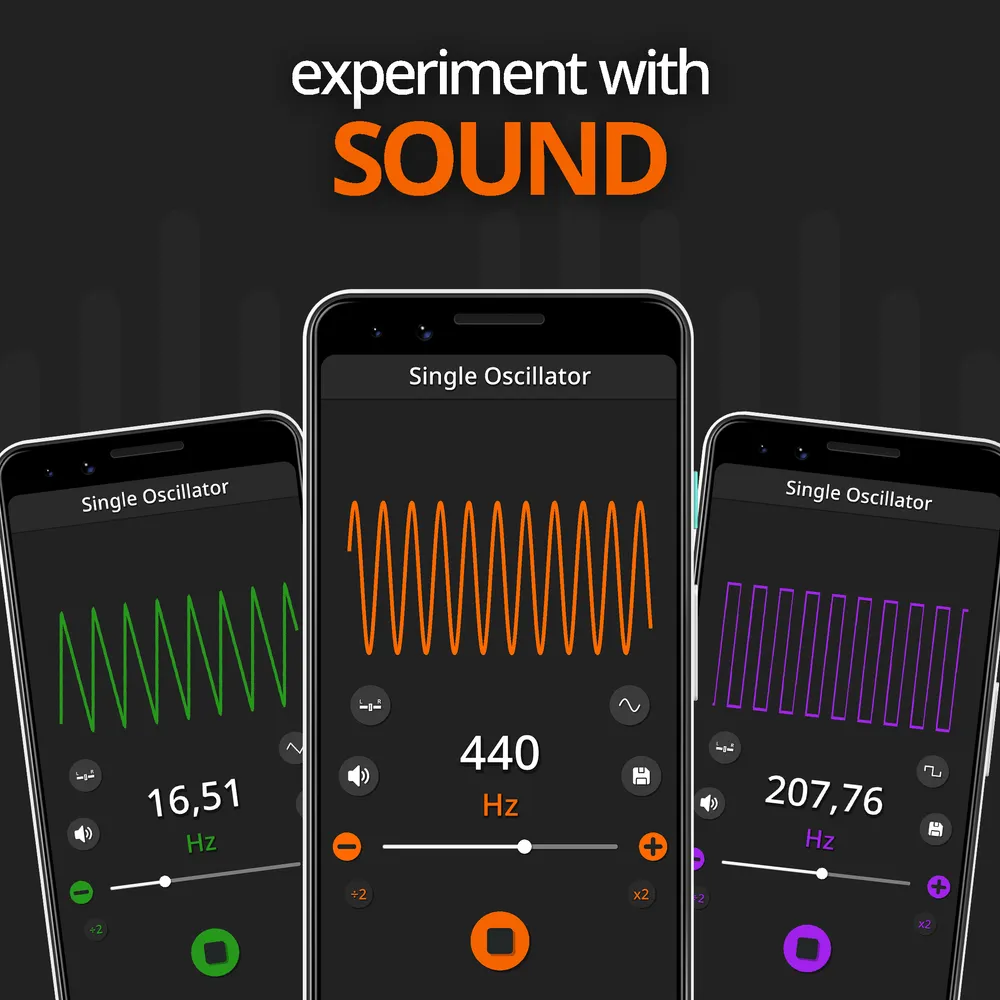
Any frequency, 1–22,000 Hz
Type it, slide to it, or step by 1 Hz, halve or double it. Decimal precision.
Sine, square, triangle, saw
Four waveforms, sent to the left ear, the right ear or both.
Multi-oscillator
Up to 15 tones at once for free, each with its own play button.
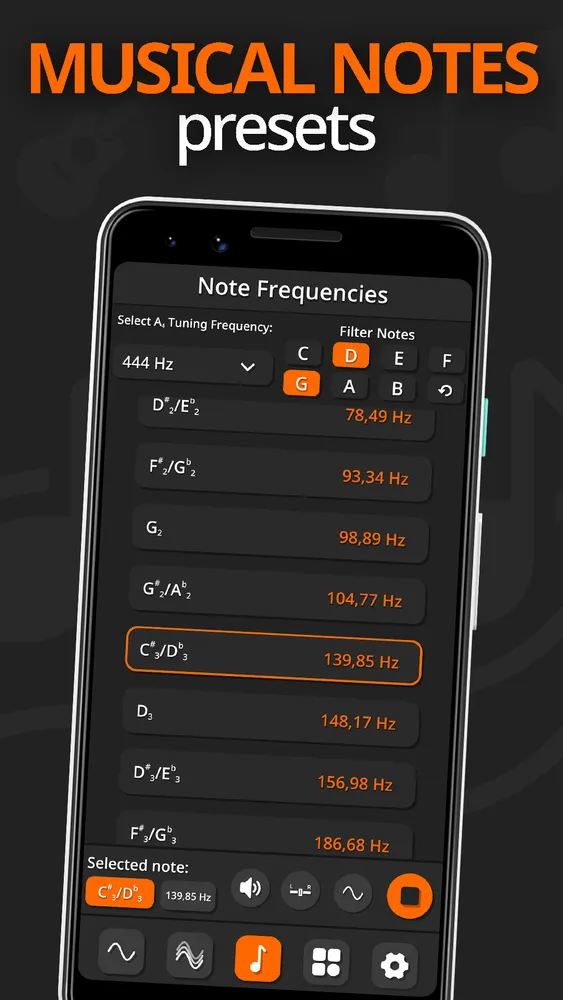
Musical notes
Every note with its frequency, with A4 tuning from 430 to 450 Hz.
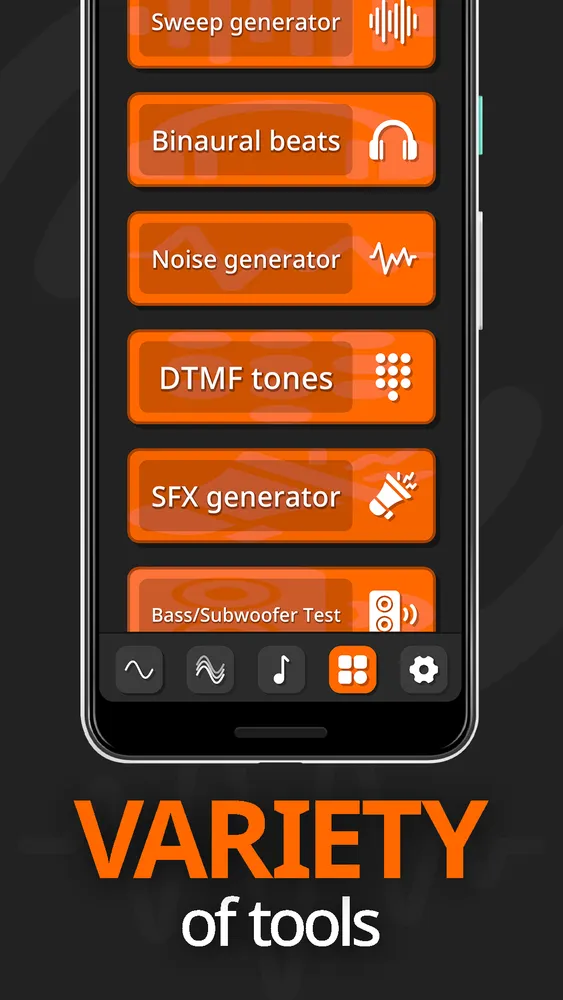
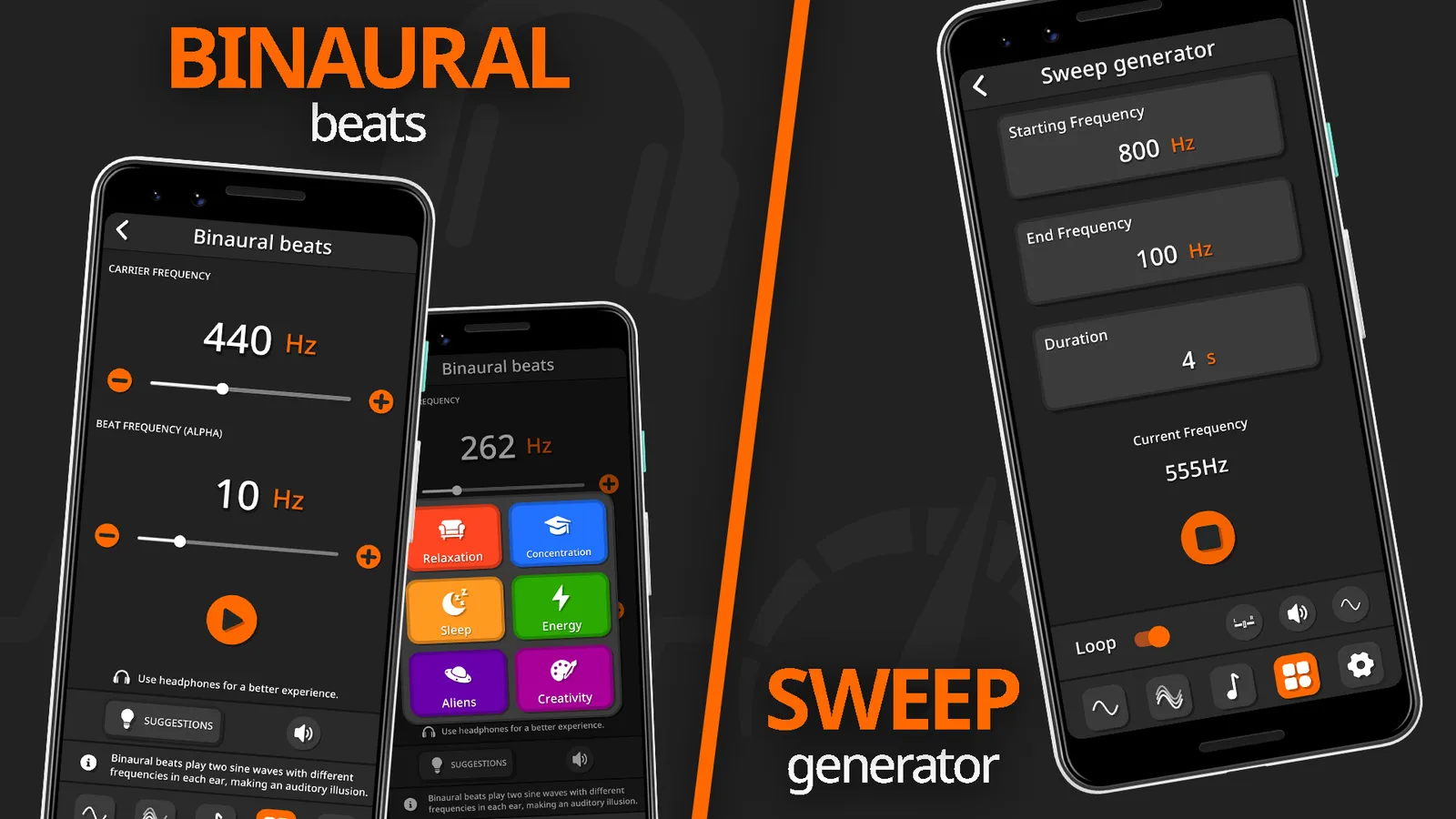
Sweep generator
Glide between any two frequencies, once or on a loop.
Binaural beats
A slightly different tone in each ear, with ready-made suggestions.
Bass & subwoofer test
Low test tones and sweeps to find where your speakers give up.
White, pink & brown noise
Steady noise, generated live rather than played from a recording.
Synthesizer
Chords and arpeggios with hold and sustain.
SFX generator
Sound effects, one tap each.
DTMF tones
The dual tones of a phone keypad.
Metronome
A steady beat, with tap tempo.
Background play
Keeps playing with the screen off or while you use another app.
WAV exportPRO
Save a tone, sweep or recording as an audio file. Part of PRO.
Browser or app?
The free tools on this site are real tools, not demos. The app does what a browser tab cannot.
| Feature | This website | The app |
|---|---|---|
| Any frequency, four waveforms | ✓ | ✓ |
| Sweeps, binaural beats, noise, bass test, DTMF, metronome | ✓ | ✓ |
| Tones playing at the same time | 1–2 | Up to 15 free, more with PRO |
| Keeps playing with the screen off | — | ✓ |
| Synthesizer and sound effects | — | ✓ |
| Saved presets | — | PRO |
| Export as a WAV file | — | PRO |
| Volume boost | — | PRO |
| No ads | ✓ | PRO |
Inside the app
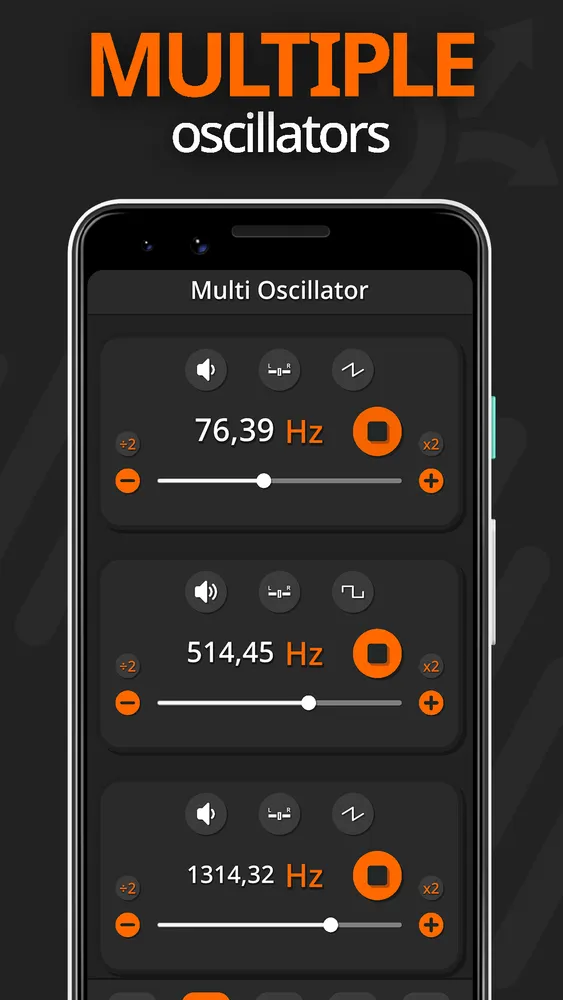
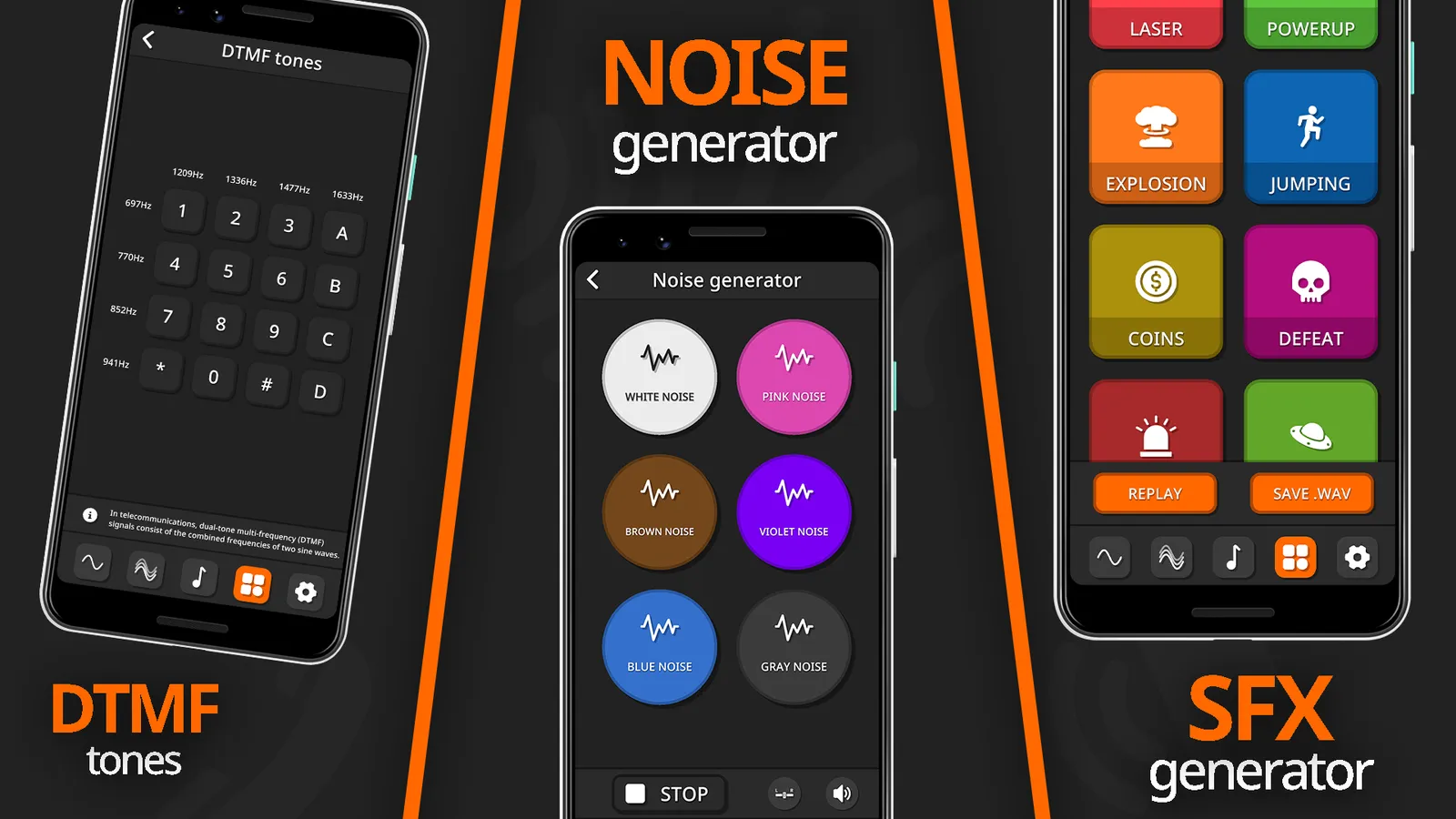
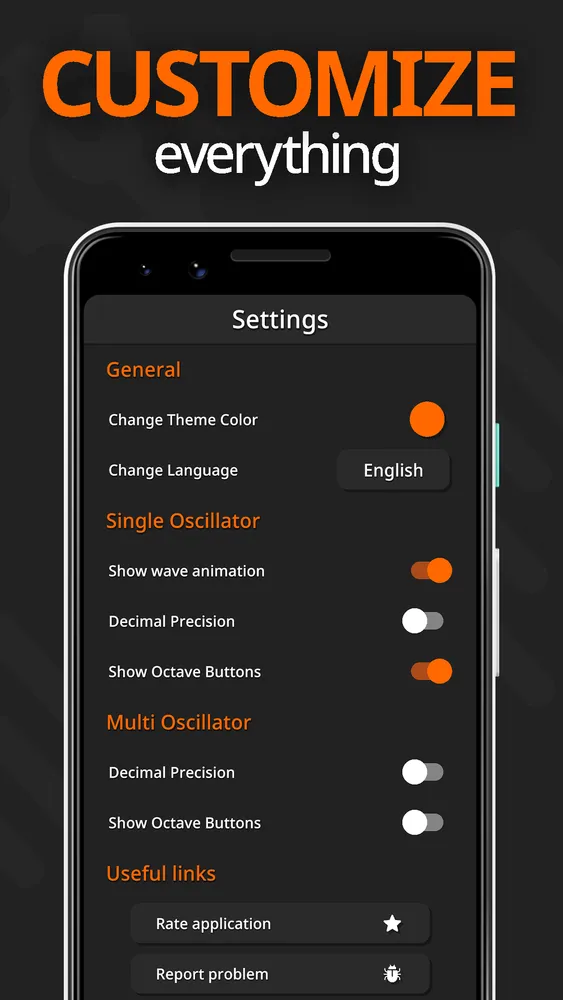
What people use it for
Testing speakers and headphones
Hold one tone to find a rattle, or sweep the range to hear where the treble and bass stop.
Checking your hearing range
Find the highest frequency you can still hear. Most adults stop somewhere between 12 and 17 kHz.
Tuning instruments
Play a reference note and tune against it, at A4 = 440 Hz or whatever your band uses.
Car audio and subwoofers
Find the real bass limit, set a crossover, and track down a door panel that buzzes.
Science and teaching
Resonance, beats, standing waves and waveforms are easier to hear than to explain.
Music and sound design
Layer tones, build chords on the synthesizer, and export what you make.
Guides
All guides- Hearing Range by Age: What's Normal at 20, 40 and 60Young ears reach about 20 kHz and the limit drops with each decade, so here are the typical upper limits by age and how to check your own hearing safely.
- How to Test a Subwoofer and Find Your Real Bass LimitSpeaker specs often promise bass they cannot deliver; this test tone method shows where your low end really stops and how to spot distortion posing as bass.
- 432 Hz vs 440 Hz Tuning: The Facts, Not the Myths432 Hz and 440 Hz tuning differ by about 32 cents; here is where 440 Hz came from, how to hear the difference, and why the 432 Hz claims fall apart.
- What Are Binaural Beats and How Do They Work?Binaural beats are a pulse your brain creates from two close tones, one per ear; learn how they work, what the brainwave labels mean, and what research shows.
- How to Find the Frequency of a Sound You Can HearMatch a hum, whine or ringing to its exact frequency by ear with a tone generator, avoid the common octave mistake, and recognize mains hum and coil whine.
- Sine, Square, Triangle and Sawtooth Waves ExplainedSine, square, triangle and sawtooth waves sound different because of their harmonics; see what each contains, why some sound louder and which to use for tests.
Get Frequency Generator
Free to download on iPhone, iPad and Android, in 38 languages.
Phone and laptop speakers cannot reproduce very low or very high tones well, so a missing tone is often the speaker, not your ears. Loud tones can damage hearing and speakers: start with the volume low.